
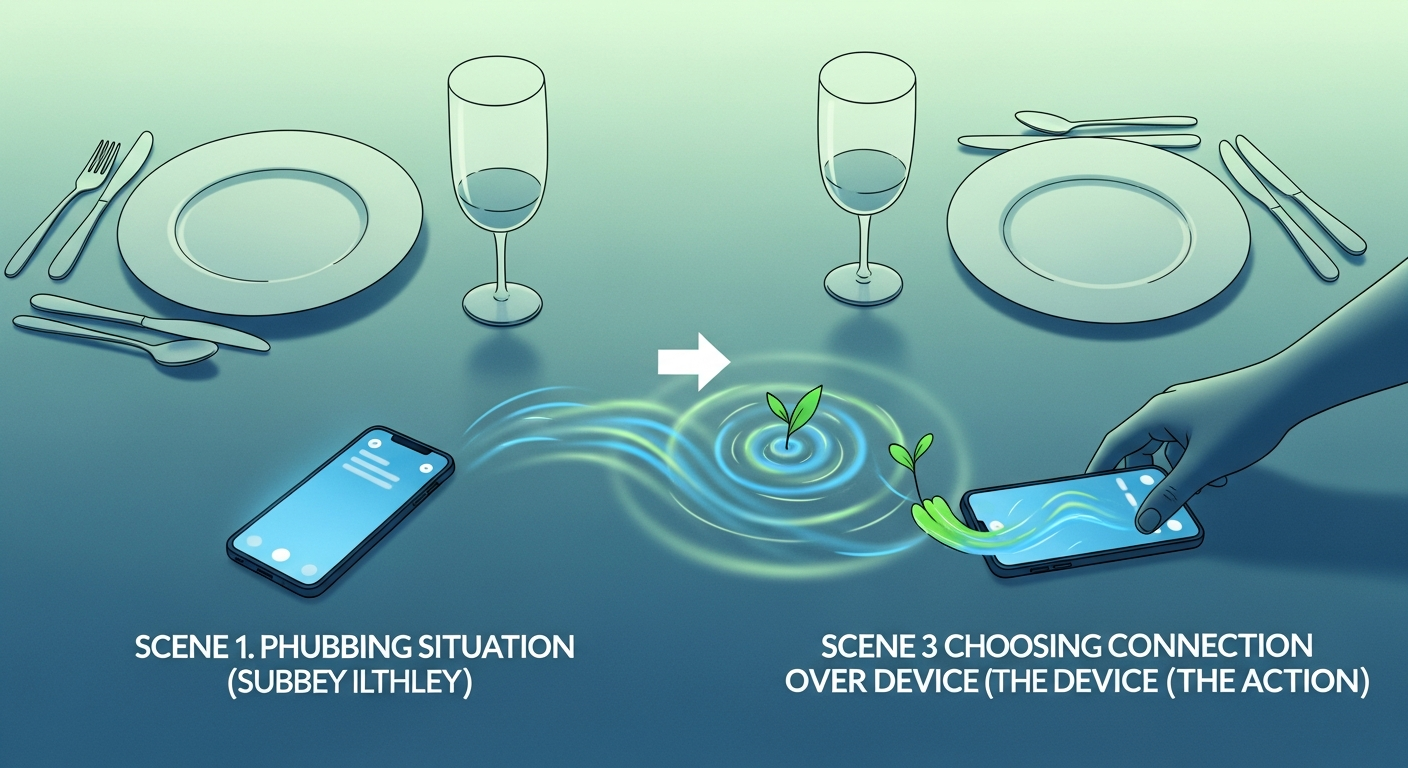
What Is Phubbing? A Complete Guide to Reclaiming Your Relationships and Digital Wellness
In an era where our pockets hum with the constant vibrations of global connectivity, a silent epidemic has taken root in our living rooms, cafes, and bedrooms. You have likely experienced it: you are in the middle of sharing a meaningful story with a friend, only to realize their eyes have drifted downward to a glowing screen. Or perhaps you are the one who instinctively reaches for your device the moment a conversation hits a natural lull. This phenomenon is known as “phubbing”—a portmanteau of “phone” and “snubbing.”
As we navigate the landscape of 2026, the integration of technology into our daily existence has reached an all-time high. While smartphones offer unparalleled convenience, the social cost is becoming increasingly clear. Phubbing is more than just a minor modern annoyance; it is a behavioral pattern that erodes intimacy, diminishes trust, and contributes to a growing sense of digital burnout. Understanding what phubbing is, why we do it, and how to stop it is no longer just a matter of etiquette—it is a vital component of digital wellness. This guide explores the psychological roots of phubbing and provides actionable strategies to help you put down the device and pick up the connection.
The Psychology of Phubbing: Why We Choose Screens Over People
To combat phubbing, we must first understand why the human brain finds the smartphone so much more compelling than the person sitting across the table. At its core, phubbing is rarely an intentional act of rudeness; rather, it is a byproduct of the “dopamine loop” engineered by modern app developers. Every notification, like, or news update triggers a small release of dopamine, the neurotransmitter associated with reward and pleasure.
In 2026, the sophistication of these feedback loops has only intensified. Our devices are no longer just tools; they are externalized versions of our social anxieties and desires. The “Fear of Missing Out” (FOMO) plays a significant role in phubbing. When we are engaged in a face-to-face conversation, the brain occasionally wanders to the infinite possibilities occurring online. Are we missing a breaking news event? Did someone respond to our last post? The compulsion to check becomes an involuntary twitch.
Furthermore, phubbing often serves as a “social crutch.” In moments of social awkwardness or vulnerability, the phone provides an immediate escape. Instead of navigating the nuances of a difficult conversation or the silence of a shared moment, we retreat into the controlled, predictable environment of our screens. Over time, this preference for digital interaction over physical presence rewires our social habits, making it harder to sustain deep, focused attention on the people who matter most.
The Hidden Costs: How Phubbing Damages Your Relationships
The impact of phubbing on interpersonal relationships is profound and well-documented. Research into “partner phubbing” (or Pphubbing) suggests that when one partner frequently uses their phone in the presence of the other, it leads to decreased relationship satisfaction and increased feelings of depression.
When you phub someone, you are sending a non-verbal message that says, “What is on this screen is more important than you.” This creates a sense of social exclusion, which the human brain processes similarly to physical pain. In long-term relationships, chronic phubbing can lead to:
1. **Erosion of Trust:** Constant distraction suggests a lack of presence, making the other person feel undervalued and unheard.
2. **Conflict Escalation:** Many arguments in the modern home start not with words, but with the frustration of being ignored in favor of a device.
3. **The “Double Phubbing” Loop:** When one person pulls out a phone, the other often follows suit to avoid feeling awkward or rejected, leading to a “parallel play” dynamic where two people are in the same room but in entirely different worlds.
4. **Reduced Intimacy:** Deep connection requires eye contact and active listening—two things that are impossible when a screen sits between two people.
In the context of digital wellness, phubbing is a primary barrier to achieving a balanced life. It fragments our attention and prevents us from experiencing the restorative power of true human connection.
Recognizing the Signs: Are You a Chronic Phubber?
Most people who engage in phubbing aren’t aware they are doing it. It has become a normalized social behavior, but that doesn’t make it any less damaging. To improve your digital wellness, you must first develop self-awareness. Ask yourself the following questions:
* **Do you keep your phone on the table during meals?** Even if it is face down, the presence of a phone signals that you are “on call,” which prevents deep engagement.
* **Do you check your phone during lulls in conversation?** Instead of leaning into the silence or thinking of a new topic, do you immediately reach for your pocket?
* **Do you feel anxious if you can’t see your phone screen while talking to others?** This is a sign of “nomophobia” (no-mobile-phone phobia), which fuels the phubbing habit.
* **Have friends or family members complained about your phone use?** If people are pointing it out, it’s likely a significant issue.
* **Do you use your phone to avoid eye contact?** If a conversation becomes intense or uncomfortable, do you use your device as a shield?
If you answered “yes” to more than two of these, you are likely engaging in phubbing behaviors. Recognizing this is the first step toward reclaiming your social life and mental clarity.
How to Stop Phubbing: Practical Strategies for the Digital Age
Breaking the habit of phubbing requires a combination of environmental changes and internal discipline. Here are proven strategies to help you stay present:
#
1. Establish “Tech-Free Zones” and Times
Designate specific areas of your home, such as the dining table or the bedroom, as phone-free zones. Similarly, set “analog hours”—for example, between 6:30 PM and 8:30 PM—where phones are placed in a central charging station away from the social action.
#
2. The “Face Down” Rule (And Beyond)
When meeting someone for coffee or dinner, make a conscious effort to keep your phone in your bag or pocket. If you must have it on the table for emergency reasons, keep it face down and explain to your companion: “I’m expecting an important call from my doctor, but otherwise, I’m all yours.” This sets a boundary and shows respect.
#
3. Audit Your Notifications
The “ping” is the enemy of presence. In 2026, we have more control over our haptic and visual alerts than ever before. Turn off all non-essential notifications. If it’s not a direct message from a human or a critical alert, you don’t need to see it in real-time. Use “Focus Modes” to filter out distractions during social hours.
#
4. Practice “Active Noticing”
When you feel the urge to check your phone, pause and ask: “What am I trying to avoid right now?” Is it boredom? Anxiety? By naming the feeling, you regain control over the impulse. Re-center yourself by making eye contact with the person you are with or noticing three things in your physical environment.
#
5. Use the “Phone Stack” Game
If you’re out with a group, try the “phone stack.” Everyone puts their phone in the middle of the table. The first person to reach for their device before the bill arrives has to pay or do a pre-agreed-upon “forfeit.” This turns digital wellness into a communal, lighthearted challenge.
Cultivating Digital Wellness: Long-Term Habits for 2026
Stopping phubbing is part of a larger journey toward digital wellness. As technology becomes more immersive—with the rise of wearable AI and augmented reality—maintaining the “human-first” principle is essential.
Digital wellness is about intentionality. It is not about becoming a Luddite or deleting all social media; it is about ensuring that technology serves you, rather than the other way around. To maintain a phub-free lifestyle in 2026, consider adopting these long-term habits:
* **Mindful Morning Routines:** Do not check your phone for the first 30 minutes of the day. This prevents your brain from starting the day in a reactive state.
* **The 20-20-20 Rule for Presence:** Every 20 minutes, look away from your screen (if you’re working) and engage with your physical surroundings. Apply this to social settings by ensuring you are offering 100% of your attention in 20-minute bursts of deep conversation.
* **Value-Based Usage:** Periodically review the apps on your phone. If an app doesn’t contribute to your personal growth, your career, or your genuine social connections, it’s just phubbing fuel. Delete it.
By prioritizing your “analog” life, you’ll find that your focus improves, your stress levels drop, and your relationships become significantly more vibrant.
How to Handle Being Phubbed: Navigating Social Dynamics
What happens when you are the victim of phubbing? It can be frustrating to feel like you’re competing with an algorithm for someone’s attention. Handling this requires grace and clear communication.
Instead of getting angry or pulling out your own phone in retaliation (which only reinforces the cycle), try these approaches:
* **The Gentle Call-Out:** “Hey, I’d love to finish this story when you’re done with that. Should I wait a minute?” This highlights their behavior without being overly confrontational.
* **The “I Feel” Statement:** “I feel a bit disconnected when we’re talking and you’re on your phone. Can we put the devices away for a bit?”
* **Leading by Example:** Sometimes, explicitly stating your own intention helps. “I’m putting my phone on ‘Do Not Disturb’ so I can really focus on what you’re saying.” This often prompts the other person to do the same.
By setting these boundaries, you contribute to a culture of presence that benefits everyone in your social circle.
FAQ: Understanding Phubbing and Digital Wellness
**1. What exactly does the term ‘phubbing’ mean?**
Phubbing is a blend of the words “phone” and “snubbing.” It refers to the act of ignoring someone in a social setting by looking at your phone instead of engaging with them.
**2. Is phubbing considered a clinical addiction?**
While “phubbing” itself isn’t a clinical diagnosis, it is often a symptom of smartphone addiction or “problematic smartphone use.” If the behavior interferes with your daily life, work, or mental health, it may be worth speaking to a professional about digital dependency.
**3. How does phubbing affect children and development?**
Phubbing can be particularly harmful to children. When parents phub their children, it can lead to attachment issues, behavioral problems, and lower self-esteem. Children learn social cues by watching their parents; if a parent is always on a phone, the child learns that digital screens are more important than human interaction.
**4. Can phubbing actually cause a breakup?**
Yes. Repeated phubbing creates a “death by a thousand cuts” scenario in relationships. It leads to a decline in communication, a loss of intimacy, and a feeling of neglect, which are common precursors to the end of a relationship.
**5. Are there apps that help stop phubbing?**
Ironically, yes. Apps like Forest, Freedom, and various “Digital Wellbeing” suites built into iOS and Android (as of 2026) can help. These tools allow you to lock certain apps during social hours or track your “pickups” to make you more aware of your habits.
Conclusion: Reclaiming the Present Moment
As we move further into 2026, the temptation to live our lives through a five-inch screen will only grow. However, the fundamental human need for connection remains unchanged. Phubbing may seem like a harmless habit, but it is a barrier to the depth and richness of experience that only comes from being fully present with others.
Stopping phubbing is an act of rebellion against the attention economy. It is a declaration that the person in front of you is more valuable than a notification, and that your time is too precious to be spent mindlessly scrolling. By implementing the strategies of digital wellness—setting boundaries, auditing notifications, and practicing mindfulness—you can break the cycle of distraction.
Remember, the goal isn’t to eliminate technology, but to master it. When you choose to put your phone away, you aren’t just “not phubbing”—you are choosing to show up for your life. Reclaim your focus, strengthen your bonds, and enjoy the beauty of an uninterrupted conversation. The digital world will still be there when you get back; the person sitting across from you might not be.